The short answer
An AI receptionist is software that answers your business phone in a natural voice, at any hour. It answers from your information, books appointments, takes messages and transfers callers to a person when needed. It usually costs less per hour of coverage than a staffed line; compare at your own call volume. Careful setup makes it sound right.
Key takeaways
- An AI receptionist listens, decides and speaks in real time, then acts on the call: booking, texting, transferring or taking a message.
- It is strongest on the calls that repeat every day: hours, pricing questions, booking, rescheduling and after-hours intake.
- It is not a person, so the best setups give it a clear handoff path for upset callers and judgment calls.
- Pricing is usually a monthly plan with included minutes; check what happens when you go over and whether setup is included.
- Test it the way your customers will: call it, interrupt it, ask something off-script and ask for a human.
An AI receptionist answers the phone for your business the way a trained front-desk person would: it greets the caller, works out what they need, answers questions, books the appointment and passes the call to your team when that is the right move. It does this on the first ring, at 2 a.m. on a Sunday as well as at 10 a.m. on a Tuesday.
This guide explains what an AI receptionist is, how one works under the hood, what it handles well and where it falls short, what it costs, and how to choose one without regretting it three months later.
What is an AI receptionist?
An AI receptionist is a voice agent that answers inbound business calls and handles them end to end: it understands what the caller says, replies in a natural voice, and takes actions such as booking an appointment or transferring the call. Unlike a phone tree, callers just talk; nobody presses 1 for sales.
The term overlaps with a few others you will see. An AI voice agent is the broader category: software that holds phone conversations, inbound or outbound. An AI receptionist is a voice agent with a front-desk job description. An answering service traditionally means human operators taking messages, and a virtual receptionist usually means a remote human team answering in your company's name.
How does an AI receptionist work?
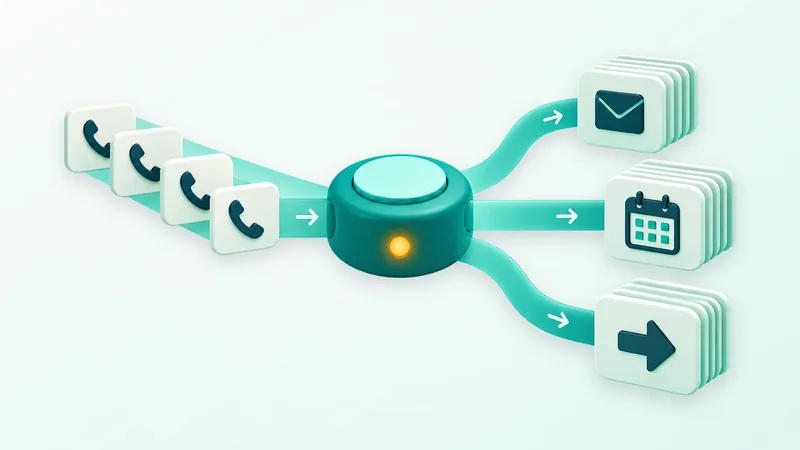
An AI receptionist works in a fast loop: it turns the caller's speech into text, decides what to say and do using a language model guided by your instructions and business information, speaks the reply in a synthetic voice, and calls your tools when the conversation needs an action. The loop repeats every time the caller speaks, usually within a second or two.
- Listen. Speech recognition transcribes the caller as they talk, including names, dates and phone numbers.
- Understand. A language model reads the transcript alongside your instructions: what your business does, your hours, your services, how you want common situations handled.
- Act. When the caller wants something done, the agent uses a tool: it checks your calendar and books a slot, sends a text with a confirmation, or transfers the call to a person.
- Speak. A text-to-speech voice says the reply. Good setups choose and tune a voice that fits the business, so it sounds like your front desk rather than a generic robot.
- Record. After the call, you get a recording, a full transcript, a short summary and the outcome, so you can see exactly what happened.
The instructions matter more than the model. Two businesses can use the same underlying technology and get very different results, because one wrote down how to handle a caller who is running late, and the other did not.
What can an AI receptionist handle?
An AI receptionist handles the calls that follow a pattern, which for most small businesses is the majority of them. The typical jobs look like this:
- Answering questions about hours, location, services, availability and policies from your own information.
- Booking, moving and cancelling appointments in your calendar or CRM while the caller is on the line.
- Qualifying new leads: asking what they need, where they are and how soon, then routing or booking them.
- Taking detailed messages and sending them to the right person, instead of a voicemail nobody checks.
- Transferring calls to a person when the caller asks for one or the situation calls for it.
- Texting the caller a confirmation, an address or a link after the call.
- Answering after hours, at lunch and during busy spells, so nobody hears a voicemail greeting.
It also works across languages. A well-configured agent can answer in the caller's language, which matters for businesses that serve Spanish-speaking or multilingual communities and cannot staff every language at every hour.
Where an AI receptionist falls short
AI receptionists are good at structured conversations and weaker at judgment. A caller who is grieving, furious or describing an unusual emergency needs a person, and a good setup notices those calls and hands them over quickly instead of trying to be clever.
- Negotiation and exceptions. "Can you waive the fee this once?" is a decision for your team, not the agent.
- Very noisy lines. Speech recognition degrades on bad cell connections and loud job sites, so the agent should confirm key details back to the caller.
- Information it was never given. If your pricing or policies are not in its instructions, it should say it will find out rather than guess.
- Callers who refuse to talk to software. Some will ask for a person immediately; that request should always be honored.
AI receptionist vs answering service vs virtual receptionist
The three options solve the same problem, an unanswered phone, in different ways. The right one depends on how complex your calls are and how much you want to spend per call.
| AI receptionist | Answering service | Virtual receptionist | |
|---|---|---|---|
| Who answers | Software, in your business's voice | Human operators, often shared across many clients | A remote human team using your greeting |
| Hours | Every hour, every day | Often 24/7; depends on plan | Usually business hours, with after-hours options |
| Booking appointments | Books directly into your calendar or CRM | Often takes a message for you to call back | Can book if given access to your tools |
| Busy periods | Not limited by how many people are on shift (ask about call capacity) | Hold times can grow at peak | Hold times can grow at peak |
| Typical pricing model | Monthly plan with included minutes | Per minute or per call | Per minute or per call, usually higher |
| Best for | High call volume, repeatable questions, after hours | Simple message-taking | Complex calls needing human judgment |
Plenty of businesses combine them: the AI receptionist answers everything, resolves what it can and transfers the rest to the office during the day. For a fuller breakdown, read AI receptionist vs answering service and our comparison of virtual and AI receptionists.
How much does an AI receptionist cost?
Most AI receptionists cost a monthly fee that includes a set number of conversation minutes, with extra minutes billed at a per-minute rate. That usually costs less per hour of coverage than a staffed line, because you pay for the minutes callers actually use rather than for hours of someone waiting by the phone. Compare the two at your own call volume.
The sticker price is only part of it. Ask whether setup is included or charged separately, whether a phone number costs extra, what happens when you run past your minutes, and whether you are locked into a long contract. We break down the pricing models and hidden costs in our AI receptionist cost guide, and Calldone's own plans are on the pricing page.
How do you choose an AI receptionist?
Choose an AI receptionist by calling it yourself before you sign anything, then checking who does the setup, which tools it connects to and how it hands calls to people. A short demo call tells you more than any feature list. Use this checklist when you compare options:
- Voice and pace. Does it sound natural, and does it let you interrupt without losing the thread?
- Handoffs. What happens when you say "I want to talk to a person"? Can it transfer to your team, take a message or book a callback?
- Booking. Does it book directly into the calendar or CRM you already use, or only collect details?
- Visibility. Do you get a recording, a transcript and a summary of every call?
- Languages. Can it answer in the languages your callers speak?
- Setup. Is a person on the vendor's side going to configure and test it with you, or are you starting from a blank screen?
- Your data. Is your call content used to train models? For healthcare, will the vendor sign the agreements you are required to have?
- Terms. Monthly or annual, overage rates, cancellation terms and what happens to unused minutes.
If you are weighing specific products, our roundup of the best AI receptionists compares the main options and says when each one fits.
Is an AI receptionist worth it for a small business?
An AI receptionist is usually worth it for a small business that misses calls during busy hours or after closing, or that pays staff to answer the same questions all day. Every missed call from a new customer is work that may go to a competitor who picked up.
It is less compelling if you get a handful of calls a week, or if almost every call needs a long, consultative conversation with an expert. Our guide to the AI receptionist for small business walks through the numbers to look at before you decide.
Getting an AI receptionist live
Going live is mostly about information, not technology. The agent needs to know your services, your hours, your booking rules, the questions callers actually ask and exactly when to involve a person. You then point your existing number at it with call forwarding, so customers keep dialing the number they already know.
With Calldone, our team runs that process with you: a short call to learn your business, then we write and train the agent, tune its voice, connect your calendar or CRM, and test it with you before it takes a live call. Our step-by-step guide on how to set up an AI receptionist covers the same ground if you want to see what is involved.
Whichever route you take, start with the calls you get most often, watch the first week of transcripts closely, and adjust. A receptionist, human or AI, gets better when someone pays attention to how it handles real callers.
Frequently asked questions
What is an AI receptionist?
An AI receptionist is software that answers a business's phone calls in a natural voice. It understands what callers say, answers questions using the business's own information, books appointments into a calendar or CRM, takes messages and transfers calls to a person when needed. It works around the clock, including nights, weekends and holidays.
Can callers tell they are talking to an AI receptionist?
Some callers can tell on a careful listen, especially on longer calls, and some will ask directly. That is fine as long as the agent is helpful, quick and honest about what it is. Good setups pick a natural voice, keep replies short, let callers interrupt, and transfer to a person straight away when someone asks for one.
Can an AI receptionist book appointments?
Yes. A properly connected AI receptionist checks real availability in your calendar or CRM while the caller is on the line, offers open times, books the chosen slot and can text a confirmation. It can also move or cancel existing appointments. Without that connection it can only collect details for your team to book later.
What happens when the AI receptionist can't answer a question?
It should do what a careful new hire would do: say it will find out, take the caller's details and pass a message to your team, or transfer the call to a person if someone is available. You decide the rules for when it hands over, such as complaints, emergencies or any caller who asks for a human.
Do I need a new phone number for an AI receptionist?
Usually not. Most businesses keep their existing number and set up call forwarding so calls reach the AI receptionist, either for every call or only when nobody picks up. A new dedicated number is an option if you want a separate line for a campaign or a new location.
Is an AI receptionist better than a human receptionist?
They are good at different things. An AI receptionist is always available, picks up on the first ring and usually costs less per hour of coverage than a staffed line; compare at your own call volume. A human receptionist is better at judgment, empathy and unusual situations. Many businesses use both: the AI answers every call and handles routine requests, and people take the calls that need them.
The Calldone Team
Editorial team
Calldone builds, deploys and manages AI voice agents that answer business calls, book appointments and qualify leads. We write about what we see running phone lines for small businesses.