The short answer
An AI appointment setter is a voice agent that books appointments by phone: it checks your live calendar, offers open times, books the slot and confirms it by text. Many also place reminder and confirmation calls and move bookings when plans change. It works well only when your calendar, booking rules and handoffs are set up with care.
Key takeaways
- An AI appointment setter books, moves and cancels appointments in your calendar while the caller is still on the line.
- Outbound reminder calls give customers an easy way to confirm or reschedule before a slot is wasted.
- The calendar connection is the core requirement: without live availability, the agent can only take a message.
- Write down your booking rules, such as durations, buffers, service areas and who can be booked, before anyone configures anything.
- No tool can promise fewer no-shows, so measure your own rate before and after you switch.
An AI appointment setter answers your phone, finds a time that suits the caller and puts it in your calendar before they hang up. Then it texts a confirmation, and on the day before, it can call to check they are still coming. That covers most of what a front desk does all day.
This guide explains how AI booking works on a real call, how reminder and confirmation calls fit in, which no-show tactics are worth using, what your calendar needs before an agent can book into it, and where a person should still step in.
What is an AI appointment setter?
An AI appointment setter is a voice agent whose main job is getting people booked. It holds a natural phone conversation, works out what the caller needs, checks real availability, books the slot and confirms it. The better ones also reschedule and cancel existing bookings and place outbound reminder calls.
You will see the term used two ways. Sales teams use it for an agent that works through a lead list to book sales meetings; we cover the rules around that in our guide to outbound AI calling. Service businesses, such as salons, clinics, repair shops and contractors, usually mean an agent that answers incoming calls and books customers. This guide focuses on the second meaning. "AI appointment scheduler" and "AI appointment booking" describe the same thing, though a scheduler sometimes means an online booking page rather than a voice.
How does an AI appointment setter book a call?
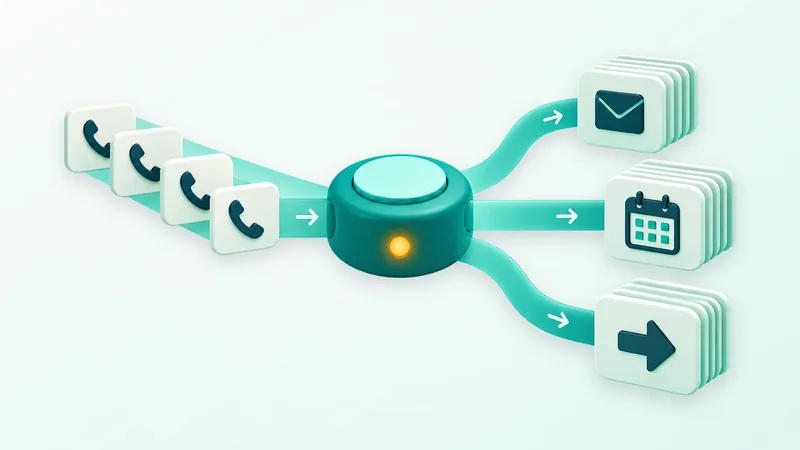
An AI appointment setter books a call by asking the questions your front desk would ask, checking your calendar for real open times, offering a few options and writing the chosen slot straight into the calendar. It then reads the details back and texts a confirmation, all before the caller hangs up.
Here is how that plays out when someone calls a hair salon wanting a color appointment with a particular stylist next week:
- Identify the request. The agent learns the service (color, not a trim), the stylist the caller wants and whether they are a new or returning client.
- Ask your questions. It asks what you told it to ask, for example whether this is a first color service, which may need a longer slot.
- Check live availability. It looks at that stylist's calendar for the right length of slot, respecting breaks and buffers.
- Offer a short list. It suggests two or three times instead of reading out a whole week.
- Book and read back. It books the chosen time, then repeats the day, time and stylist so mistakes surface before the call ends.
- Confirm by text. It sends an SMS with the booking details and anything the client should know before arriving.
- Log the call. You get the recording, transcript, a short summary and the outcome, so you can check the booking was right.
If the stylist is fully booked, the agent should not dead-end the caller. It can offer another stylist, a later week or a message to the salon, depending on the rules you set. Our AI receptionist guide for salons goes further into stylist-by-stylist booking.
Reminder and confirmation calls
The same agent can work the other direction. An outbound campaign takes a list of upcoming appointments and calls each customer: "Hi, this is the front desk at Oak Hill Auto. You're booked for a brake inspection tomorrow at 9 a.m. Can you still make it?" The customer confirms, asks to move it, or cancels.
That conversation is the advantage a reminder call has over a reminder text. A text says "reply C to confirm"; a call lets the customer say "actually, can we do Thursday instead?" and get it sorted in one go. Many businesses use both: a text when the booking is made and a call shortly before the visit. Calldone runs outbound campaigns like this from a contact list, covering reminders, confirmations, follow-ups and check-ins, with one agent placing many calls.
Automated calls carry legal rules. The FCC's February 2024 declaratory ruling confirmed that AI-generated voices count as "artificial" voices under the Telephone Consumer Protection Act, so the consent rules for those calls apply. Only call customers who gave you their number and expect to hear from you, and check the rules with counsel. Our outbound calling guide covers the details.
Can an AI appointment setter reduce no-shows?
An AI appointment setter can help reduce no-shows by confirming every booking clearly, reminding customers at the right time and making it easy to reschedule instead of simply not turning up. It can't guarantee a lower rate, because no-shows depend on your customers, services and policies. Measure your own no-show rate for a month before the change and a month after.
The tactics that matter most are simple and mostly about friction:
- Confirm at booking. Read back the day, time and address, and text it, so nobody leaves the call unsure.
- Remind at a sensible time. The day before suits most appointments; a longer job booked weeks out may need an extra reminder a few days ahead.
- Make moving easy. A customer who can reschedule in one short call is less likely to just skip it.
- Say what to bring. Paperwork, a parts list or "arrive ten minutes early" prevents wasted visits.
- State your policy once. If you charge for late cancellations, the agent can mention it politely at booking.
- Refill freed slots. Keep a list of customers who asked for an earlier time and call them when a cancellation opens one up.
What your calendar needs before an AI can book into it
An agent books only as well as the calendar and rules behind it. If your real availability lives in your head, the agent will double-book you or turn callers away. Before setup, make sure the calendar reflects reality and the rules are written down.
| Rule | Example | Why the agent needs it |
|---|---|---|
| Appointment types and lengths | Haircut 45 minutes, color 2 hours | So it books a slot long enough for the job |
| Buffers | 15 minutes between site visits | So travel or cleanup time isn't booked over |
| Who can be booked | Only two of five technicians do installs | So the right person gets the right job |
| Lead time | No same-day bookings after 2 p.m. | So the schedule stays workable |
| Service area | Within 25 miles of the shop | So it doesn't book a job you won't travel to |
| Details to collect | Name, mobile number, address, reason for visit | So your team arrives prepared |
| Never book | New-client consultations need a staff call first | So exceptions reach a person |
The connection matters as much as the rules. Calldone books into Google Calendar or your CRM, and connects with CRM and practice systems including GoHighLevel, Clio, Tebra and CureMD. Other systems can usually be connected through custom actions or webhooks; we confirm that during setup rather than promising it up front.
Where a person should still handle the booking
Most bookings follow a pattern, which is why an agent handles them well. A few don't, and your rules should send those to a person through a transfer, a message or a scheduled callback.
- Multi-visit or complex jobs. A kitchen remodel estimate that needs two people and a site visit is a conversation for your team.
- Exceptions to policy. "Can you squeeze me in before you open?" is a judgment call.
- Upset customers. Someone angry about a missed appointment needs a human apology, not a new slot.
- Anything clinical or legal. An agent can book the visit; it shouldn't advise on symptoms or legal strategy.
What should you ask before choosing an AI appointment scheduler?
Ask which calendars it books into, whether it can reschedule and cancel as well as book, whether it places reminder calls, and who builds and tests your booking rules. Then call a test agent and try to book something awkward. A list of features tells you less than five minutes of trying to break it.
- Does it read live availability, or only collect details for someone to book later?
- Can it move and cancel existing appointments by phone?
- Can it send a text confirmation after booking?
- Can it run reminder and confirmation calls from a list?
- What happens when the caller asks for a person?
- Do you get a recording and transcript of every booking call?
- Who sets it up: you, or the vendor's team?
- How is it priced, and what happens if a busy month uses more minutes than planned? Calldone's plans are on the pricing page.
If you run a busy front desk, compare this with the broader AI receptionist, which handles booking alongside every other kind of call: questions, messages, transfers and after-hours intake.
Getting an AI appointment setter live
Start with your calendar, not the voice. Clean up availability, write the rules in the table above, list the questions callers ask before they book, and decide what goes to a person. Then connect the calendar, test bookings with made-up callers, and watch the first week of real bookings closely.
With Calldone, our team does the configuration and testing with you after a short call about how your business books. Our walkthrough on how to set up an AI receptionist shows each step, including what you supply and what we handle.
Frequently asked questions
What is an AI appointment setter?
An AI appointment setter is a voice agent that books appointments over the phone. It talks with the caller, checks live availability in your calendar or CRM, books a slot and confirms it, often by text. Many can also reschedule or cancel bookings and place reminder calls. Sales teams sometimes use the term for agents that book meetings from a lead list.
Can an AI appointment setter make reminder calls?
Yes, many can. An outbound campaign calls customers with upcoming appointments, asks them to confirm and lets them reschedule or cancel in the same conversation. Because these calls use an AI-generated voice, US consent rules for artificial-voice calls apply, so only call customers who gave you their number and expect to hear from you, and check your plans with counsel.
Which calendars can an AI appointment scheduler book into?
It depends on the product, so ask for the exact list. Calldone books into Google Calendar and connects to GoHighLevel, Clio, Tebra and CureMD. Other systems can often be connected through custom actions or webhooks, which the team confirms during setup. Whatever you use, the agent needs live, two-way access so it never books over an existing appointment.
Will an AI appointment setter reduce no-shows?
It can help, but nobody can honestly promise a number. The agent makes it easy to confirm, remember and reschedule, which removes common reasons people miss appointments. Your services, customers and cancellation policy matter just as much. Track your no-show rate for a month before you switch and a month after, so you can judge the effect yourself.
Can customers reschedule with an AI appointment setter?
Yes, if the agent is connected to your calendar with permission to change bookings. The caller says they need a different time, the agent finds their existing appointment, offers open slots and moves it, then confirms the new time. You can also set rules, such as sending same-day changes or repeat reschedules to a person instead.
Is an AI appointment setter the same as an online booking page?
No. A booking page shows open slots and waits for the customer to pick one. An AI appointment setter holds a conversation: it answers questions, works out which service and how long, handles exceptions and books on the customer's behalf. Many businesses keep both, because some customers prefer clicking and others would rather call and talk.
The Calldone Team
Editorial team
Calldone builds, deploys and manages AI voice agents that answer business calls, book appointments and qualify leads. We write about what we see running phone lines for small businesses.