The short answer
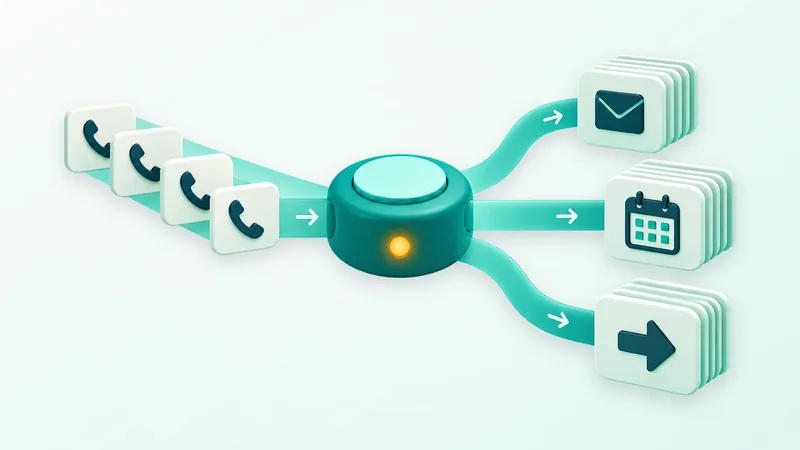
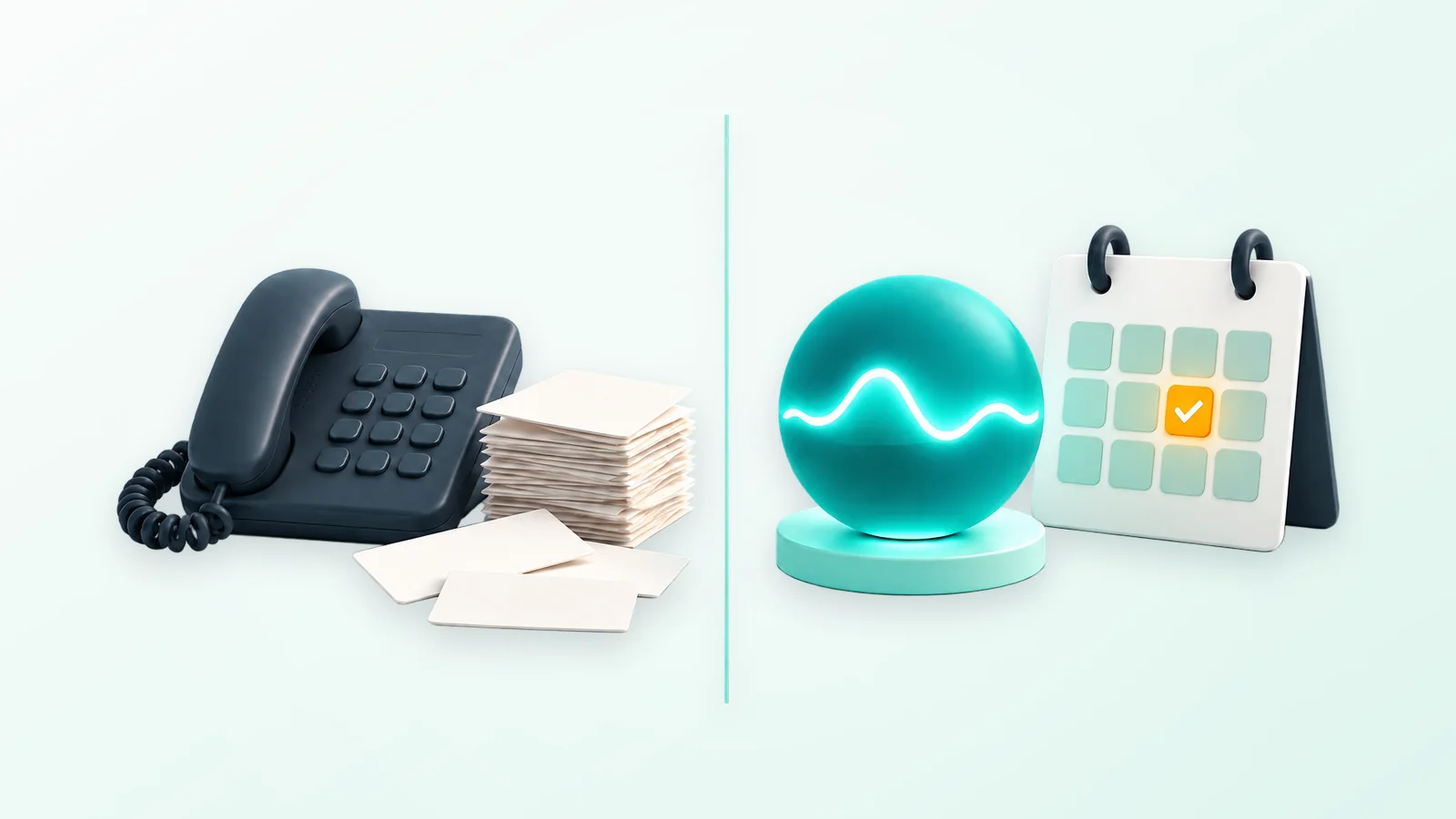
An answering service puts human operators on your line, usually to follow a script and take messages. An AI receptionist answers with software that can resolve routine calls itself by answering questions, booking appointments and routing callers. Choose by what your calls need: judgment and empathy favor people, volume and repetition favor AI, and many businesses use both.
Key takeaways
- An answering service's usual output is a message, while an AI receptionist's usual output is a finished task or a clean handoff.
- Answering services commonly bill per minute or per call; AI receptionists commonly charge a monthly plan with included minutes.
- Live operators still win on emotional, high-stakes and truly unusual calls.
- Hybrid setups, such as AI first with people for escalations, often beat picking one side.
- Switch in stages: start the AI on after-hours or overflow calls and read the transcripts before moving more traffic.
Choosing between an AI receptionist vs answering service comes down to one question: what should happen on the call? If most callers only need someone to take a message, a live answering service does that well. If they want answers, bookings or a fast route to the right person, an AI receptionist can usually finish the job itself. This guide compares the two on the same calls, on cost and on fit, then shows how to combine them.
What is the difference between an AI receptionist and an answering service?
An answering service is a team of human operators who pick up your calls under your business name, follow a script and pass messages to you. An AI receptionist is software that answers in a natural voice, works from your own business information and can act during the call, for example by booking an appointment or transferring the caller. One relies on people; the other on instructions and integrations.
Both stand between your callers and voicemail, and both can cover nights and weekends. What differs is what each is built to produce. Our AI receptionist guide explains the software side in depth. If you are weighing remote human receptionists who work as an extension of your staff, that is a separate service, covered in virtual receptionist vs AI receptionist.
One call, handled two ways
The clearest comparison follows the same calls through each option. These are typical outcomes, not guarantees: a sharp operator or a badly configured agent can change either column.
| The call | Typical answering service outcome | Typical AI receptionist outcome |
|---|---|---|
| "Are you open Saturday, and how much is a basic tune-up?" | Operator reads the hours from the script and may take a message about price | Answers both from your business information, if you supplied it |
| "I'd like to book a cleaning next week." | Takes the caller's details so your office can call back | Checks your calendar, books a slot and texts a confirmation |
| "I need to move my appointment to Friday." | Passes on a message; the change waits for your team | Finds the booking and reschedules it during the call |
| "There's water coming through my ceiling." | Follows your emergency script and contacts the on-call person | Recognizes the urgency, then transfers to your on-call number or takes an urgent message, by your rules |
| An upset caller with a complaint | A trained person listens, calms them and passes on the details | Should hand the call to your team quickly or take a careful message |
| Three people ringing at the same moment | Calls wait for the next free operator | Not tied to who is on shift; ask the provider about call capacity |
The pattern holds across most call types. Answering services produce messages and rely on your team to finish the work later. AI receptionists finish routine work during the call and hand the rest to your team with a transcript attached. That is the main promise of AI call answering: fewer calls that end with "someone will get back to you."
Side-by-side comparison
| Live answering service | AI receptionist | |
|---|---|---|
| Who answers | Human operators, often shared across many client businesses | Software configured for your business alone |
| What it knows | Your script and any notes you send | Your FAQs, services, hours, policies and booking rules |
| Typical end of a call | A message emailed or texted to you | An answered question, a booking, a transfer or a detailed message |
| Empathy and judgment | Strong, depending on the operator | Limited; it should pass these calls to people |
| Consistency | Varies by operator and shift | Gives the same answer the same way each time |
| Record of the call | Usually a short written message | Often a recording, transcript and summary |
| Changing the script | Send changes to the service to roll out to operators | Update the agent's instructions, then test |
| Usual billing | Per minute or per call, sometimes with a monthly minimum | Monthly plan with included minutes and a per-minute overage rate |
Which costs less, an AI receptionist or an answering service?
For businesses with steady call volume, an AI receptionist usually costs less per call, because a monthly plan covers many minutes of conversation without paying for operator time. A live answering service can work out cheaper at very low volumes, such as a handful of after-hours messages a month. The real answer depends on your call count and average call length.
Compare on the same basis. Take last month's calls, estimate the minutes and price both options on that volume. Then ask about setup fees, monthly minimums and whether rates change for nights or holidays, and count the staff time spent returning messages an AI could have resolved. Our AI receptionist cost guide walks through the math, and Calldone's current plans are on the pricing page.
When a human service still wins
Some businesses really are better served by people on the phone. A live answering service is the stronger pick when:
- Most calls are emotional or high-stakes, such as crisis lines or sensitive personal matters, and every caller should reach a person.
- Calls need on-the-spot judgment your rules can't capture, like deciding whether a late-night problem is worth waking the owner.
- Your callers strongly prefer people, and you would rather pay for that than introduce an automated assistant.
- You get only a few calls a month and simply need someone polite to write down a message.
Decision table: match the service to your calls
| If most of your calls are | Lean toward | Why |
|---|---|---|
| Questions about hours, prices, services or directions | AI receptionist | Answers come from your own information every time |
| Appointment booking and rescheduling | AI receptionist | It can book into your calendar during the call |
| New leads you need to screen quickly | AI receptionist | It asks the same screening questions on every call |
| Messages for someone to return | Either | Both capture messages; compare cost and level of detail |
| Distressed or sensitive callers | Answering service | People handle emotion and discretion better |
| A mix of routine and complex calls | Hybrid | AI resolves the routine and hands the rest to people |
Hybrid setups that use both
You don't have to pick a side. Common combinations look like this:
- AI first, people for escalations. The AI receptionist answers every call, resolves the routine ones and transfers the rest to your staff during opening hours.
- People by day, AI after hours. Your team or a live service covers business hours, and the AI takes nights, weekends and holidays through a time-based forwarding rule on your phone system.
- AI for overflow. Your front desk answers first, and calls move to the AI only when the line is busy or rings out.
- AI for the routine, a person for emergencies. The AI handles bookings and questions and, under your rules, sends true emergencies straight to whoever is on call.
Whichever pattern you choose, write down which calls go where and test each path from an outside phone. Our guide to keeping your number with call forwarding explains the no-answer, busy and after-hours settings these setups depend on.
How do you switch from an answering service to an AI receptionist?
Switch in stages rather than all at once. Start the AI receptionist on one slice of calls, usually after hours or overflow, keep the answering service on the rest, and compare outcomes for a few weeks before moving more traffic. Check your current contract's notice period first, so you don't pay for overlap you didn't plan.
- Collect your current scripts, message templates and on-call rules from the answering service.
- List the five or six call types you get most and decide which the AI should finish and which it should hand over.
- Set up the AI receptionist with your hours, services, booking rules and handoff numbers, then test it with realistic calls.
- Point after-hours or overflow calls at the AI with conditional forwarding; your published number stays the same.
- Read the transcripts each week and compare them with the service's messages from the same period.
- Move more call types across once the transcripts look right, then give the service notice.
With Calldone, our team handles the setup steps with you: a short call to learn the business, then we write and train the agent, connect your calendar or CRM and test the call flow together before it takes a live call.
Neither option is right for every business. The best choice matches what your callers actually need, and for many businesses that means software for the routine and people for the moments that matter.
Frequently asked questions
Is an AI receptionist better than an answering service?
It depends on your calls. An AI receptionist is usually better for routine calls such as questions, bookings, rescheduling and lead screening, because it can finish them during the call. A live answering service is better for emotional, sensitive or unusual calls that need human judgment. Many businesses get the best result by combining the two.
Can an AI receptionist replace my answering service completely?
For many small businesses it can handle most of the same calls, but not every caller. If your rules can describe what should happen on a call, an AI receptionist can usually handle it or pass it to your team. If you need a human to answer every call overnight, keep a live service for those hours or for escalations.
What is AI call answering?
AI call answering means software picks up your business calls, understands what callers say and replies in a natural voice. Beyond taking messages, it can answer questions from your own information, book or move appointments, send a text confirmation and transfer calls to your team. It works at any hour and keeps a record of each call.
Do answering services book appointments?
Some do, usually by logging into a calendar or scheduling tool you give them access to, though many focus on taking messages. Ask whether operators book directly, how they check availability and what happens when your calendar changes. An AI receptionist connected to your calendar checks open times live during the call and books the slot itself.
Will callers know they are talking to an AI receptionist?
Some will, especially on longer calls, and the agent should say it is an automated assistant if asked. Callers often care more about a quick, accurate answer than about who provides it. Short replies, a natural voice and an easy way to reach a person separate an AI receptionist callers accept from one they resent.
Can I keep my phone number if I switch from an answering service?
Yes. Answering services and AI receptionists usually both work through call forwarding, so your published number stays the same. You change where your carrier or phone system sends calls, either all of them or only unanswered, busy and after-hours calls. Test each forwarding rule from an outside phone before you cancel the old service.
The Calldone Team
Editorial team
Calldone builds, deploys and manages AI voice agents that answer business calls, book appointments and qualify leads. We write about what we see running phone lines for small businesses.